
Deep thoughts for a Monday… Remember when “I’m not on social media” was a flex? When people proudly declared they’d deleted Facebook, avoided Instagram, and never joined Twitter? Remember how that worked out?
We’re about to see the same pattern with AI. The backlash is already forming. The “AI-free” movement is gaining momentum. And just like social media, it won’t matter—because AI is already too deeply embedded in the infrastructure of modern life to meaningfully avoid.
The Inevitable Backlash Cycle
Every transformative technology follows the same arc:
Phase 1: Novelty and Promise
“This will change everything! Democracy! Connection! Efficiency!”
Phase 2: Ubiquity and Normalization
Everyone adopts it. It becomes infrastructure. We stop thinking about it.
Phase 3: The Reckoning
Unintended consequences emerge. Manipulation. Addiction. Inequality. The costs become visible.
Phase 4: The Backlash
“I’m quitting [technology]! I’m going back to [previous thing]! I’m living authentically!”
Phase 5: The Integration
Society settles into uneasy coexistence. Some people meaningfully disengage. Most people don’t. Life goes on.
We watched this play out with social media. We’re watching it now with smartphones. And we’re about to watch it with AI.
The AI Backlash Is Already Forming
The early signals are everywhere:
Artists and creatives organizing against AI-generated art, fighting for their livelihoods and creative authenticity.
Writers demanding “no AI” clauses in contracts, worried about their work being used to train models that replace them.
Educators grappling with students using AI to write essays, questioning what learning even means anymore.
Workers across industries watching AI capabilities expand and wondering which jobs survive.
Consumers growing tired of chatbots, AI-generated content that feels hollow, and the sense that everything is becoming homogenized and synthetic.
The backlash isn’t coming. It’s here. And it will intensify.
Why “AI-Free” Will Become a Premium Positioning
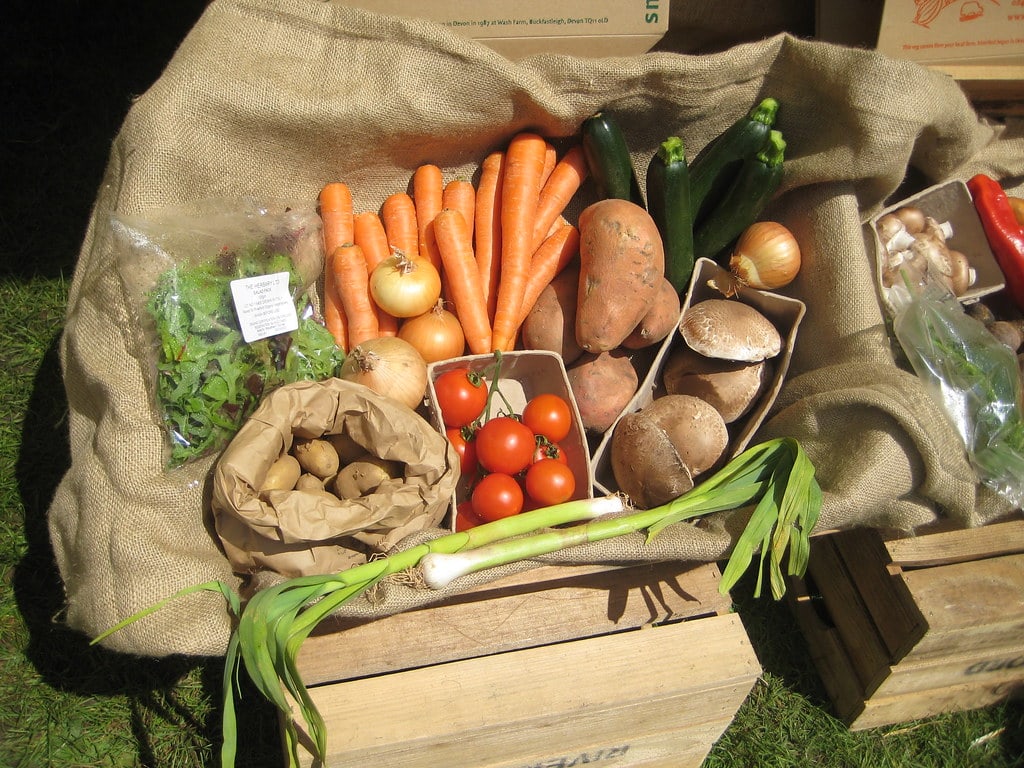
Just as “organic” became a food movement and a marketing position, “AI-free” will become a differentiator—particularly for premium products and services.
We’ll see:
“Human-Made” certifications – Like organic labels, but for content, creative work, services. “This article was written entirely by a human.” “This design was created without AI assistance.”
Premium pricing for human labor – Artisan positioning. “We don’t use AI because quality matters.” The craft brewery model applied to knowledge work.
“AI-free” as luxury brand positioning – High-end consulting, creative agencies, bespoke services explicitly marketing their rejection of AI tools.
Regulatory requirements – Some industries (legal, medical, financial) may require disclosure of AI involvement. “AI-assisted” labels on content and services.
This will create a market. People will pay more for “human-made” work, just as they pay more for organic vegetables, craft beer, and vinyl records.
You Can’t Actually Be AI-Free Paradox
Here’s where it gets interesting. Just like it’s nearly impossible to eat truly pesticide-free food (pesticides are in groundwater, drift from neighboring farms, persist in soil for decades), it will be nearly impossible to be truly AI-free.
Consider what “AI-free” would actually require:
You Can’t Avoid AI in Search
Even if you never use AI tools yourself, Google’s AI Overviews synthesize information when people search for you. Your competitors use AI. Your content appears in AI-generated summaries whether you consent or not.
If someone searches for information in your industry, AI synthesizes an answer from multiple sources—possibly including yours. You’re implicated in the AI ecosystem even if you’ve never touched ChatGPT.
Your Platforms Use AI
WordPress (your CMS) is integrating AI features. Your hosting provider uses AI for security and optimization. Your email marketing platform uses AI for send-time optimization and subject line testing. Your analytics platform uses AI for anomaly detection and insights.
Even if you don’t actively “use AI,” the tools you depend on are using it in the background. You can’t opt out without abandoning the platforms themselves.
Your Supply Chain Uses AI
Your freelancers probably use AI for initial drafts, research, or editing. Your contractors use AI-powered project management tools. Your vendors use AI for customer service, logistics, inventory management.
When you say “we don’t use AI,” what you mean is “we don’t directly use AI ourselves, but everyone we work with probably does, and we can’t actually verify that.”
Your Customers Use AI
Prospects use ChatGPT to research your industry before contacting you. They use AI to analyze your proposals. They use AI assistants to draft emails to you. They use AI to compare you to competitors.
You’re interacting with AI-assisted customers even if you’ve never adopted AI yourself.
The Internet Itself Runs on AI
Content delivery networks use AI for routing optimization. DNS services use AI for security. CDNs use AI for caching decisions. Email filters use AI for spam detection. Security systems use AI for threat detection.
The infrastructure of the modern internet is now AI-enabled. Being “on the internet” means being touched by AI, whether you want to be or not.
A “Organic Food” Parallel or not?
The organic food movement provides a potential parallel:
The ideal: Food grown without synthetic pesticides, herbicides, or fertilizers.
The reality: Organic farms exist near conventional farms (pesticide drift). Groundwater contains residual chemicals from decades of conventional farming. Seeds themselves may have been treated before organic farmers bought them. Processing facilities handle both organic and conventional products.
The result: “Organic” became a certification with specific standards, not a guarantee of zero chemical exposure. It’s “less” exposure, not “no” exposure. The label provides useful guidance but doesn’t represent absolute purity.
“AI-free” will follow the same path:
The ideal: Work produced entirely by humans with no AI involvement at any stage.
The reality: Tools, platforms, and supply chains all use AI. The research informing human work was probably AI-assisted somewhere along the way. The editing, formatting, distribution—all potentially AI-touched.
The result: “AI-free” or “human-made” will become certifications with specific standards. It will mean “minimal AI involvement in core production,” not “zero AI anywhere in the process.”
Organic” became about meeting certain standards rather than absolute purity, “AI-free” will attempt to become about transparency and intentionality, but not complete absence of AI in the supply chain.
What This Means for Businesses
If you’re a business trying to figure out your position on AI, here’s the honest assessment:
The “AI-Free” Strategy Can Work, But…
It requires explicit positioning, not passive avoidance:
You can’t just “not use AI” and expect that to be a differentiator. Your competitors are using AI and becoming more efficient. Your costs are higher. Your output is slower.
But you can intentionally position as “human-crafted,” “artisan,” “premium quality that requires human judgment” and charge accordingly. This works if:
- You’re targeting audiences who value and will pay for “human-made”
- You’re willing to accept smaller scale and higher margins
- Your work is genuinely better because of human involvement (not just slower)
- You can verify and certify your claims meaningfully
Think: Craft brewery, not generic beer. Boutique consultancy, not enterprise agency. Artisan, not factory.
The “AI-Enabled” Strategy Is Efficient, But…
It requires accepting commoditization risk:
Using AI makes you faster and more efficient. But if everyone in your industry uses the same tools, you risk becoming indistinguishable. AI output tends toward the average—competent but not distinctive.
This might work if:
- You compete on efficiency, price, or scale
- Your differentiation comes from other factors (relationships, integrations, service)
- You use AI for speed but differentiate on strategy, judgment, creativity
- You’re transparent about AI use and clients care more about results than methods
Think: Modern manufacturing using automation but competing on design, service, delivery.
A Hybrid Approach Is Probably Most Realistic
Most successful businesses will likely:
Use AI selectively for internal efficiency – Research, analysis, drafts, data processing, routine tasks.
Emphasize human judgment in client-facing work – Strategy, creative direction, relationship management, quality control.
Don’t make AI the story – Market your outcomes and expertise, not your tools. Clients don’t care about your process; they care about results.
Be transparent when asked – If clients have concerns about AI, explain your approach honestly. Some will care, most won’t.
Think: Modern creative agency using technology for efficiency but selling human creativity and strategic thinking.
The Social Media Parallel Continues
Remember the social media cycle?
2005-2010: “Everyone should be on social media! It’s revolutionary!”
2010-2015: “If you’re not on social media, your business will fail!”
2015-2020: “Social media is toxic! It’s destroying society! Delete your accounts!”
2020-present: Most people still use social media. Some people quit. Life goes on. We’re all vaguely uncomfortable with it but also dependent on it.
AI will follow the same path:
2022-2024: “AI is revolutionary! Everyone must adopt it!”
2024-2026: “If you don’t use AI, you’ll be left behind!”
2026-2028: “AI is destroying creativity! It’s eliminating jobs! Resist!”
2028+: Most businesses use AI. Some explicitly don’t. Society settles into uneasy coexistence. We’re all vaguely uncomfortable but also dependent.
The people who “quit social media” still:
- Use messaging apps (which are social networks)
- Watch YouTube (which is a social network)
- Read content shared on social platforms or lurk without an account
- Interact with businesses that use social media
- Live in a culture shaped by social media
Similarly, people who “quit AI” will still:
- Use platforms that run on AI
- Consume content touched by AI somewhere in its production
- Work with people and companies that use AI
- Be affected by AI decisions (search results, recommendations, filters)
- Live in an economy and culture shaped by AI
The complete opt-out is an illusion. The best you can do is be intentional about how deeply you engage.
The Certification Problem
How would “AI-free” certification even work?
For food, “organic” certification involves:
- Farm inspections
- Input documentation (seeds, fertilizers, pest control)
- Processing chain verification
- Regular testing
- Clear standards enforced by USDA
For AI-free, you’d need:
- Tool audits (what software was used?)
- Process verification (at every stage?)
- Supply chain transparency (freelancers, contractors, vendors?)
- Platform verification (what AI features were disabled?)
- Ongoing monitoring (because AI is being added to everything constantly)
AI is software. It’s invisible. It’s in the background of platforms. It’s evolving daily. The line between “using AI” and “using tools that happen to use AI” is already blurry. Certifying something as truly “AI-free” would be nearly impossible and prohibitively expensive—just like verifying truly pesticide-free food is essentially impossible.
We’ll end up with standards that mean “minimal AI use” or “no AI in core production” rather than absolute absence?
The Cultural Shift
The broader question is: what does it mean to be human in an AI-augmented world?
We’re heading toward a society where:
AI becomes invisible infrastructure – Just as we don’t think about the algorithms running electricity grids or traffic lights, AI will fade into the background of digital infrastructure.
“Human-made” becomes a premium tier – Like handmade furniture or farm-to-table restaurants, human work without AI assistance will command premium prices for those who value it.
Most work becomes human + AI collaboration – The debate won’t be “AI or not,” it will be “how much AI and for what?”
Disclosure becomes expected – Just as nutrition labels, ingredient lists, and sourcing information became standard, we’ll probably see “AI disclosure” become routine for certain types of work.
New authentication emerges – Proof of human creation becomes valuable. Digital watermarks, blockchain verification, human certification—we’ll develop ways to verify authenticity.
A generational divide deepens – People who came of age before AI will remember “how it used to be.” People growing up with AI won’t know anything different. Just like people born after smartphones don’t understand why anyone worried about “screen time.”
The Uncomfortable Truth
Here’s what most think pieces won’t tell you:
You can’t meaningfully resist AI through individual choices alone.
Just like you can’t meaningfully resist surveillance capitalism by deleting social media while keeping your smartphone. Or resist industrial agriculture by only buying organic while living in a city. Or resist climate change through personal consumption choices while industrial systems continue unchanged.
These are systemic issues that require systemic responses, not individual consumer choices.
The AI transformation is happening at the infrastructure level. Search engines use it. Platforms integrate it. Supply chains optimize with it. The internet itself runs on it.
Your individual choice to avoid AI tools is like choosing to avoid smartphones while everyone you work with uses them. You can do it. It will cost you efficiency. It probably won’t change much.
So What Should You Actually Do?
Ignore AI because you don’t understand it or don’t like it, then wonder why you’re falling behind. Or – Consciously decide your position based on your market, values, and competitive differentiators.
If You Choose “AI-Free” Positioning
Do it explicitly and premium:
- Market it as a feature, not just avoid mentioning AI
- Charge accordingly (2-3x) for human-crafted work
- Target audiences who value human judgment and creativity
- Develop certification or verification processes
- Accept limitations on scale and efficiency
Don’t do it passively:
- “We just don’t use AI” without premium positioning is cost disadvantage with no benefit
- Avoiding AI while competitors use it is slow decline unless you’re charging more
If You Adopt AI
Use it thoughtfully:
- For efficiency on routine work, not as replacement for strategic thinking
- With human review and quality control
- To augment human capabilities, not replace human judgment
- With transparency when clients ask
Don’t let it commoditize you:
- If AI makes you identical to competitors, you’ve gained efficiency but lost differentiation
- Differentiate on what AI can’t do: relationships, original thinking, judgment, creativity
Most Importantly: Understand the Landscape
You’re operating in an AI-affected world whether you use AI or not:
- Your competitors may use it (affecting pricing and speed expectations)
- Your customers use it (affecting how they research and evaluate you)
- Your platforms use it (affecting how you’re found and presented)
- The infrastructure uses it (affecting everything about how the internet works)
Your choice isn’t “AI or no AI.” It’s “how do I position myself in an AI-saturated market?”
The Long View
Twenty years from now, the “do you use AI?” question will sound as quaint as “do you use email?” or “did you have a website?”
Like it or not, just like microplastics, AI will be embedded in everything. The tools we use, the platforms we work on, the infrastructure we depend on. It will be like electricity or the internet—fundamental infrastructure we don’t think about.
The people who “won” won’t be those who adopted fastest or resisted hardest. They’ll be those who:
- Understood what AI actually is and isn’t good for
- Positioned themselves intelligently in the changing landscape
- Maintained the human elements that create real value
- Adapted without losing what made them distinctive
- Built sustainable businesses regardless of which tools they used
The AI backlash will come. “AI-free” will become a marketing position. Certification standards will emerge. Some businesses will succeed by explicitly rejecting AI, just as some succeed with organic, craft, artisan, or slow-food positioning.
But most businesses will integrate AI tools while trying to maintain whatever made them human, distinctive, and valuable in the first place.
And everyone—users and resisters alike—will be living in an AI-enabled world, because that’s how infrastructure works. Once it’s built into the foundation, you can’t opt out without abandoning the structure entirely.
The question isn’t whether to participate in the AI economy. You already are, whether you realize it or not.
Knihter helps organizations navigate digital transitions with clear thinking and technical depth—whether that means implementing AI strategically, positioning as human-centered alternatives, or something in between. The technology changes, but the need for honest guidance doesn’t.
Contact us to discuss your actual options—not someone else’s agenda.